



the conflict between Kylian Mbappe and Paris Saint-Germain has gone beyond being just another chapter in the long-running battle between a superstar and his club to become a landmark legal case in European soccer. It is no longer a matter of a failed renewal or a move to Real Madrid, but something deeper: what happens when the big contracts of modern football end up in court and word clashes with paper.
The starting point is key. In France, the dispute is not resolved in a sporting instance, but in the ordinary labor jurisdiction. Xavier Salvatore, partner in the litigation department of Baker McKenzie in Paris, explains it clearly: "the Conseil de Prud'hommes is the labor court of first instance competent for individual disputes between an employer and a worker, in this case between club and footballer". The reason is structural: "in France they are employees, hired and employed under fixed-term employment contracts".
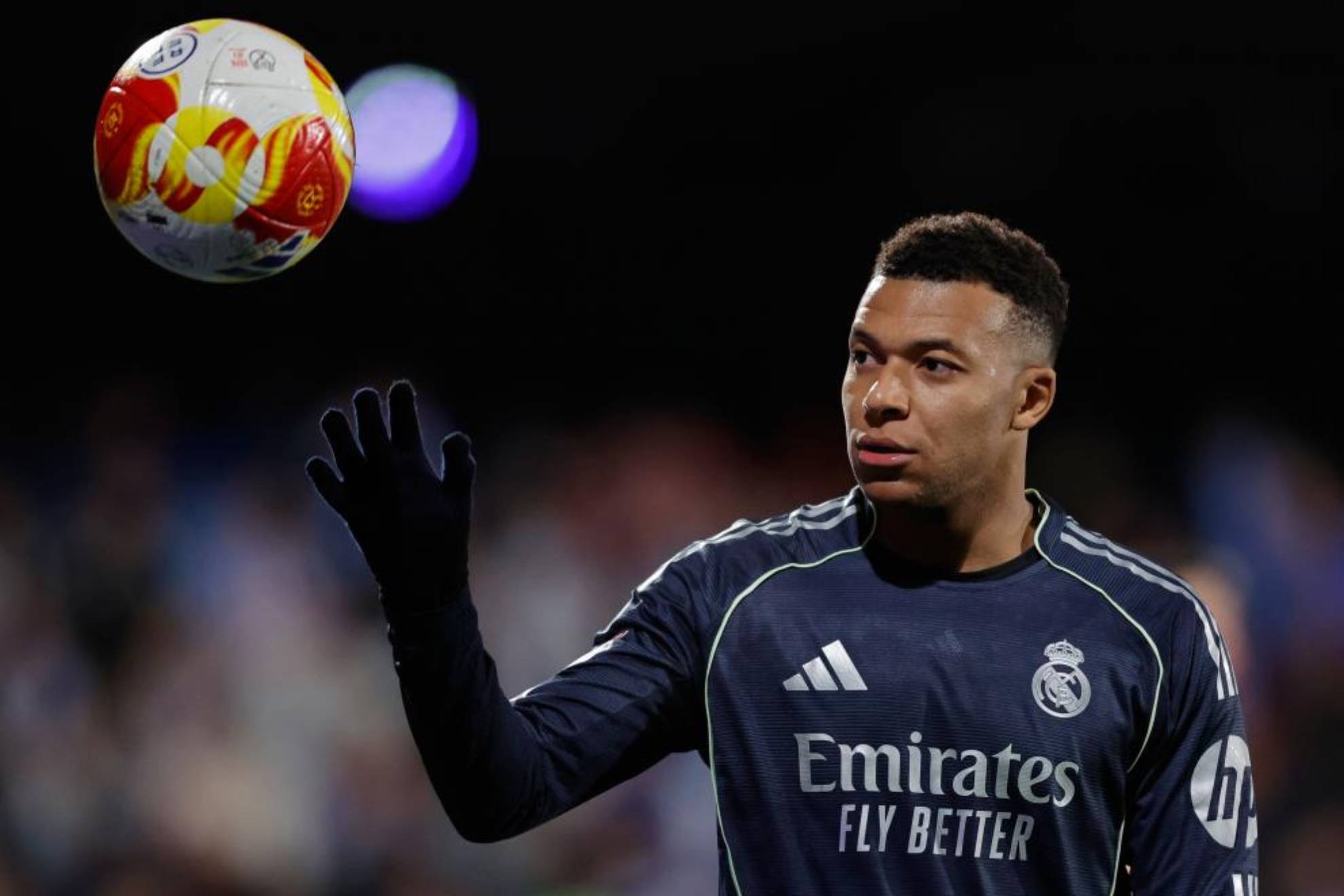
Kylian Mbappé makes a ridiculous goal during Real Madrid drill
The court's decision is not final, but it does set the playing field. Salvatore explains that "this is a first decision that may be appealed to the competent court of appeal within one month of notification of the decision to the parties". However, the ruling incorporates a decisive element that conditions any strategy of the club: provisional enforcement.
In the heart of the litigation, the legal debate has focused on a very specific issue. Carlos Hurtado, a sports law lawyer at Baker McKenzie Madrid, explains that "the amount that PSG has been ordered to pay Mbappe corresponds to unpaid wages and bonuses". The court, however, did not accept all of the player's claims: "Mbappe's claim to have his fixed-term contract reclassified as an indefinite contract was dismissed, as was his claim for moral harassment". Even so, the ruling was forceful in other respects: "the court also ordered the provisional enforcement of the judgment - meaning that PSG must pay the amount to Mbappe even if it decides to appeal - and also ordered the publication of the judgment on PSG's website".
The amount PSG have been ordered to pay Mbappe corresponds to unpaid wages and bonuses
Carlos Hurtado
PSG's main argument was based on the existence of an alleged verbal agreement under which the player would have waived these amounts. From a legal point of view, French law does not prohibit it, but it does subject it to an almost impossible test.
Salvatore recalls that "in theory, a verbal agreement may be valid under French law", although he introduces the key nuance: "in practice, it is very difficult to prove its existence". In fact, he stresses that "the French Court of Cassation tends to dismiss such claims, considering that the employer has failed to prove the existence of such an agreement".
The French Court of Cassation tends to dismiss such claims, considering that the employer has failed to prove the existence of such an agreement
Xavier Salvatore
The exact reasoning of the court cannot yet be analysed in detail. "We have not had access to the full decision, so we cannot give an exact explanation of the court's reasoning," warns Salvatore. For now, he adds, "the decision is not yet available to the public, but it will soon be published on PSG's official website, as the club has been ordered to make it accessible for one month".
According to French law, a verbal agreement is not automatically invalid; however, it has very little chance of being enforced in practice
Xavier Salvatore
However, the legal framework is clear: "under French law, a verbal agreement is not automatically invalid; however, it has very little chance of being enforced in practice, as proving its existence is extremely difficult". Everything therefore points to the fact that "the court's reasoning has focused on evidential aspects that determine either the non-existence of such a commitment or insufficient evidence to determine its existence", something that can only be confirmed when the full text is made public.
During the proceedings, the pressures reported by the player's defence were also addressed. Hurtado recalls that "one of Mbappe's allegations was that he had suffered moral harassment", a figure that "according to French labour law consists of repeated actions that cause a deterioration in the working conditions of the person and can have consequences for their physical or mental health". However, he concludes categorically that "this claim was not accepted by the court".
A special case
PSG also launched a high-caliber economic offensive based on concepts such as perte de chance. Hurtado explains that "'perte de chance' refers to the certain and direct loss of an opportunity that had a reasonable probability of materializing" and that "it is only compensable if the opportunity was real and serious, not hypothetical." In this specific case, he adds, "one of PSG's claims was related to the loss of the opportunity to have been able to transfer Mbappe to another club and have received a price for such transfer."
Even more complex was the claim for moral or reputational damages. Hurtado recalls that "in most football-related litigation, claims for moral or reputational damages are usually made by the players and not by the clubs". French case law awarding such damages to entities "is extremely limited, although not excluded in principle", and requires "demonstrating genuine and direct damage to their image, supported by concrete evidence".
The appeal seems like the next logical step for PSG, although it is not without risk. Salvatore issues a clear warning: "In the event of an appeal, the decision of the Court of Appeal could be even worse for PSG, as the Court of Appeal could consider that other claims made by Mbappe and which have been dismissed should be accepted."
Beyond the specific case, the impact on the market is evident. Hurtado believes that "this case should encourage more rigorous contract drafting practices".
This case should encourage more rigorous contract drafting practices
Xavier Salvatore
The trend, he explains, is that "clubs and players want to ensure to a greater extent that bonuses, loyalty bonuses and exit clauses are precisely defined and documented in writing", opting for "the formal integration of any secondary agreement into the main contract to mitigate the risk of litigation".
In his professional experience, "many of these conflicts have their origin in a contract that does not clearly regulate the obligations and consequences of each party", and when this happens, the risk of litigation skyrockets.
From the player's point of view, Hurtado detects recurring mistakes. "It is not uncommon for players to rely on informal or verbal guarantees, side agreements or agreements that are not properly documented," which then creates evidentiary problems. It also happens that "they sign contracts with ambiguous or improvable wording without sufficiently anticipating the consequences of how these clauses could be interpreted in the event of a conflict", or even that they breach formal commitments that weaken their legal position.
Looking to the future
Therefore, he insists that "all commitments, especially financial ones, should be set out expressly in clear, precise and comprehensive contractual provisions, leaving little room for interpretation," and on the growing importance of obtaining specialist advice, even where one party has greater negotiating weight
Looking to the immediate future, Hurtado has no doubts: "It is most likely that PSG will appeal to the Court of Appeal". The club, he explains, "has significant financial and reputational interests in challenging the court ruling" and has already publicly stated its intention to do so, maintaining that it acted in good faith.
Even so, he admits that "it is very difficult to predict with certainty the outcome of the appeal, but the majority opinion is that the chances of success are low", especially because "the labour court is the second authority to rule in Mbappe's favour, after the decision of the LFP's joint appeal committee on 25 October 2024".The case remains open, but it leaves a lesson that is hard to ignore in elite football: when conflict reaches the courts, words carry little weight. What decides, almost always, is what is written.
اخلاء مسئولية! : هذا المحتوى لم يتم انشائة او استضافته بواسطة موقع اخبار الكورة و اي مسؤلية قانونية تقع على عاتق الموقع مصدر الخبر : marca [1] , يتم جمع الاخبار عن طريق خدمة ال RSS المتاحة مجانا للجمهور من المصدر : marca [1] مع الحفظ على حقوق الملكية الخاصة بمصدر الخبر.






0 تعليق